Indian Thali: A Complete Guide to a Balanced Homemade Meal
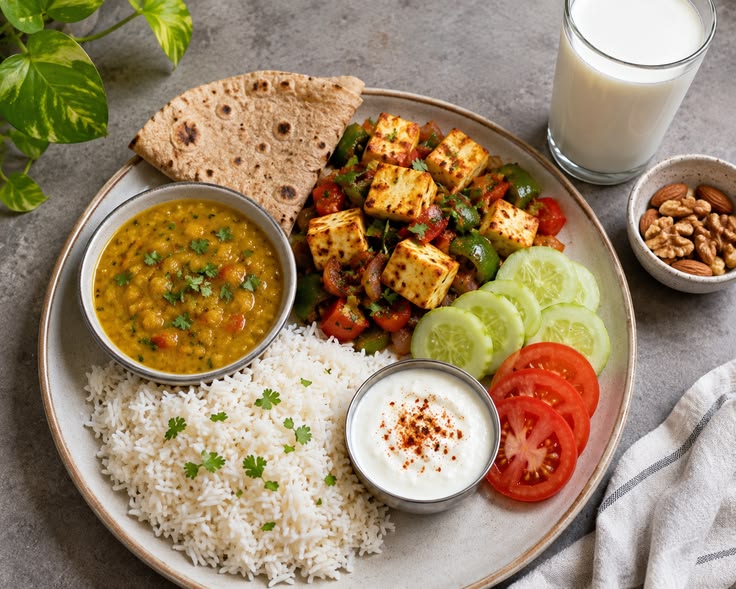
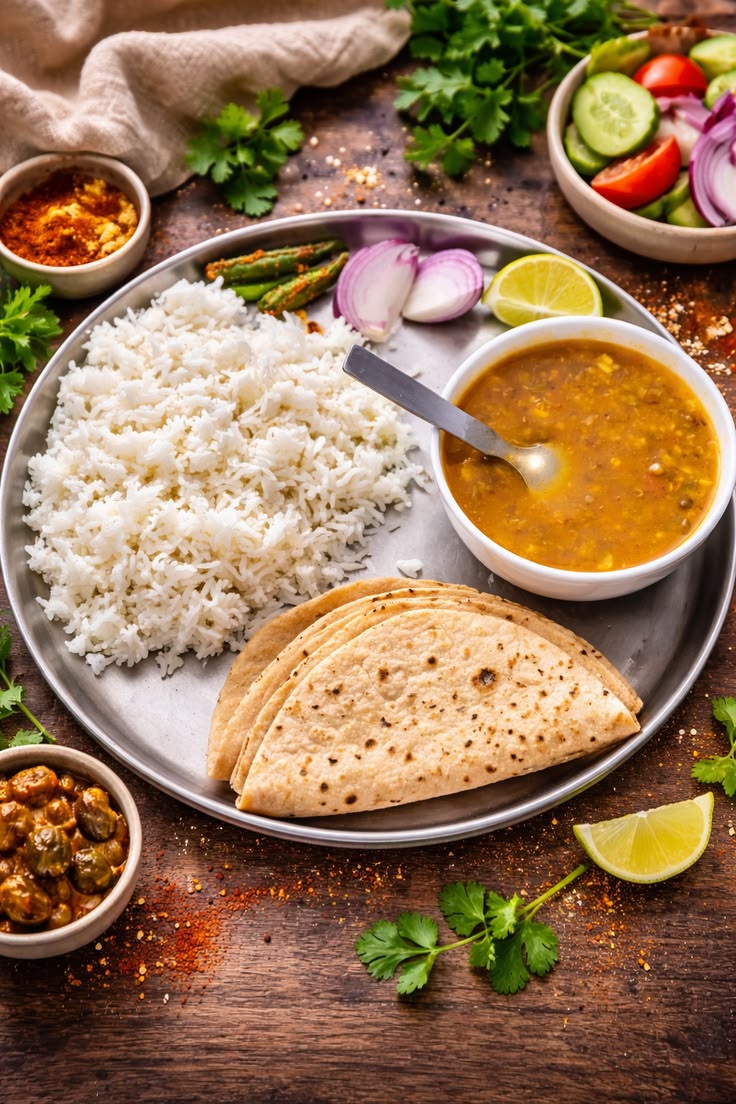
Indian food is known for its rich flavours, variety, colours, and comforting taste. Among all Indian meals, the Indian thali holds a special place. A traditional thali is not just a plate full of different dishes; it is a complete meal that brings together different flavours and food groups in one serving.
introduction
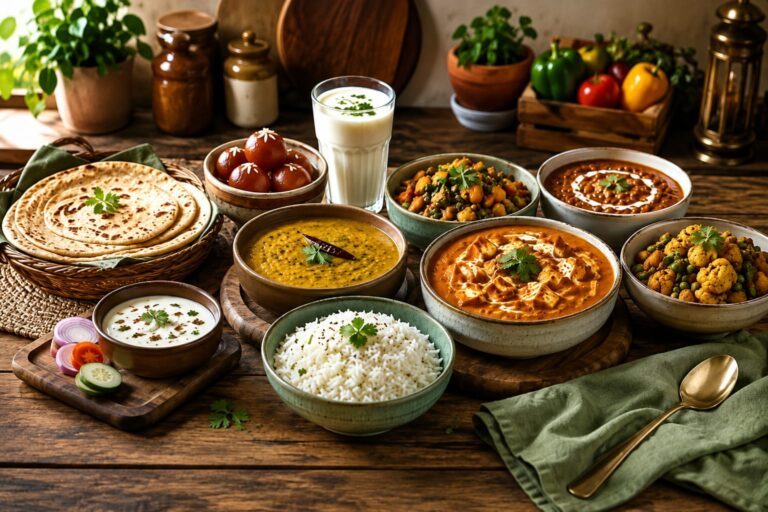
Looking for a balanced homemade meal that is tasty, filling, and full of variety? An Indian thali is a perfect example of a wholesome traditional meal. It brings together different dishes such as roti, rice, dal, seasonal sabzi, curd, salad, pickle, chutney, and sometimes a delicious sweet—all served together on one plate.
A traditional Indian thali is not just about having many dishes. It is about enjoying different flavours, textures, and food groups in one satisfying meal. Depending on the region, season, and family preferences, an Indian thali can be simple for everyday meals or more elaborate for special occasions.
In this complete guide to Indian thali, we will explore what a traditional thali includes, how to make a balanced homemade thali, its benefits, popular regional varieties such as Rajasthani, Gujarati, Punjabi, and South Indian thali, and simple tips for preparing one at home.
At Mumma’s Rasoi, we believe that homemade food should be fresh, comforting, and full of familiar flavours. Our homemade thali, fresh daily tiffin, and healthy homemade snacks are made to bring the comforting taste of ghar ka khana to your everyday meals.
What Is an Indian Thali?
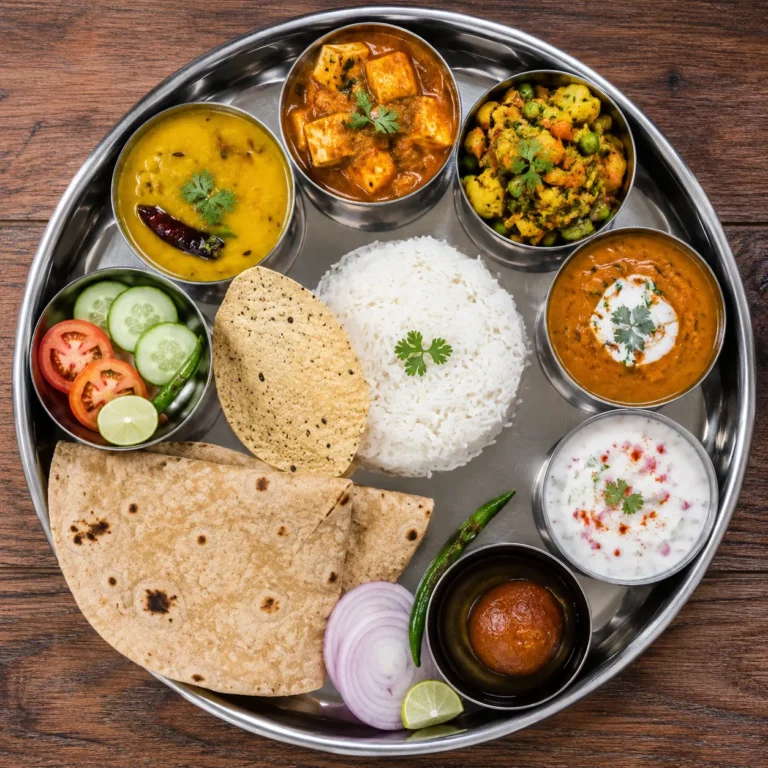
An Indian thali is a traditional meal served on a large plate, usually with several small bowls containing different dishes. The word “thali” refers to the plate, but it is also commonly used to describe the complete meal served on it.
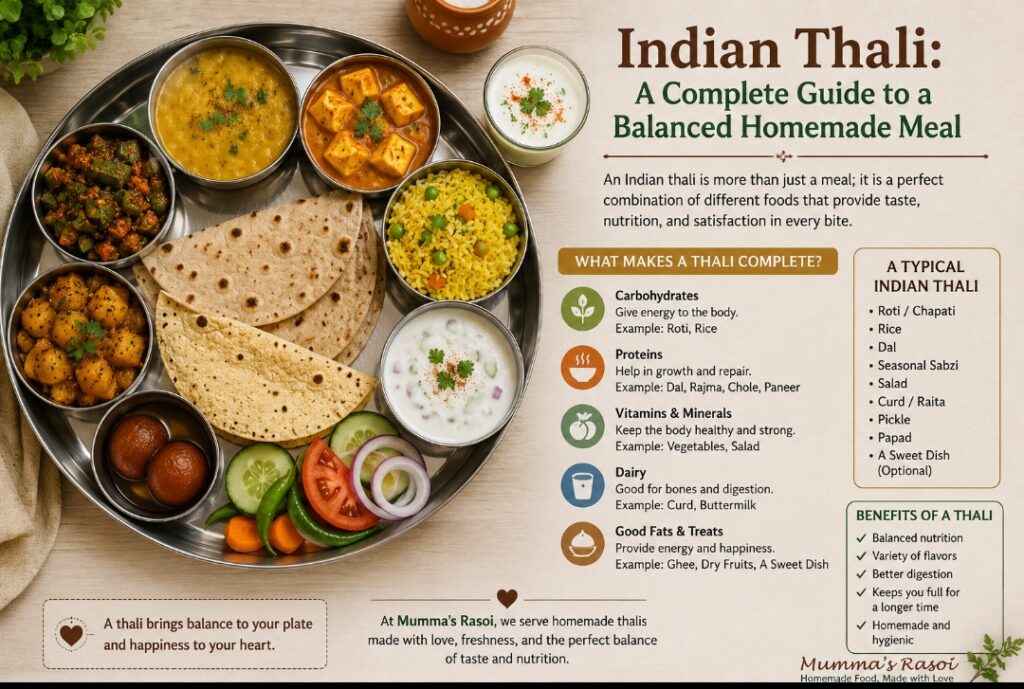
A typical Indian thali may include:
- Roti or chapati
- Rice
- Dal
- Seasonal vegetable
- Paneer or another curry
- Curd or raita
- Salad
- Pickle
- Chutney
- Papad
- A small sweet or dessert
The exact dishes depend on the region, season, occasion, and restaurant or home menu.
The beauty of an Indian thali is its variety. You can enjoy something spicy, something mild, something crunchy, something creamy, and something sweet in the same meal.
What Does a Traditional Indian Thali Include?
A thali can be simple or elaborate. A homemade everyday thali does not need to contain ten or fifteen dishes. Even a few carefully selected foods can make a satisfying meal.
1. Roti or Chapati
Roti is a common part of many Indian meals. It is generally made using wheat flour and cooked on a tawa.
Rotis provide carbohydrates and can be paired with dal, sabzi, paneer, or other curries.
For an everyday homemade thali, fresh roti can be a simple and comforting choice.
2. Rice
Rice is another popular part of an Indian thali. Plain steamed rice, jeera rice, pulao, or other rice preparations can be served depending on the meal.
Rice pairs especially well with dal, rajma, chole, and curries.
3. Dal
Dal is an important part of Indian home cooking. Different types of lentils can be used to prepare dal, such as moong dal, masoor dal, toor dal, and chana dal.
Dal adds flavour and provides a source of plant-based protein to the meal.
A simple bowl of warm dal with rice or roti can make a meal feel complete and comforting.
4. Sabzi
Vegetables add colour, flavour, and variety to the thali. Seasonal vegetables can be cooked in many different ways.
Some popular options include:
- Aloo gobi
- Bhindi masala
- Mixed vegetable
- Lauki
- Aloo matar
- Seasonal green vegetables
- Baingan masala
Using seasonal vegetables can also help bring variety to your everyday meals.
5. Paneer or Curry
Depending on the type of thali, a paneer dish or another curry may be included.
Popular options include paneer butter masala, shahi paneer, matar paneer, or simple homemade paneer curry.
For a lighter homemade meal, the curry can be prepared according to personal taste and preference.
6. Curd or Raita
Curd and raita are popular accompaniments to Indian meals. They can add a cooling and refreshing element to a spicy or flavourful thali.
Raita can be prepared with ingredients such as cucumber, onion, tomato, or boondi.
7. Salad
A simple salad can include cucumber, tomato, onion, carrot, beetroot, lemon, or other fresh ingredients.
It adds freshness and crunch to the meal and can make the plate look more colourful.
8. Pickle and Chutney
Pickle and chutney may be served in small portions to add extra flavour.
Green chutney, mint chutney, mango pickle, or mixed vegetable pickle can give the meal a delicious traditional touch.
9. Papad
Papad adds a crispy texture to the thali. It can be roasted or prepared according to the recipe.
Even a simple meal can feel more enjoyable with a crunchy papad on the side.
10. Sweet Dish
Many special thalis include a dessert. Depending on the region and occasion, this could be gulab jamun, kheer, halwa, rasgulla, or another traditional sweet.
For everyday meals, dessert is optional, while festive and special thalis may include something sweet.
How Is an Indian Thali a Balanced Meal?
One of the biggest advantages of a well-planned thali is variety. Different foods can contribute different nutrients to a meal.
A simple balanced thali can combine:
Carbohydrates: Roti, rice, or other grains
Protein: Dal, chana, rajma, paneer, curd, or other protein-rich foods
Vegetables: Seasonal sabzi and fresh salad
Dairy: Curd, raita, paneer, or other dairy foods
Healthy fats: Nuts, seeds, or cooking oils used appropriately
Flavour: Chutney, pickle, herbs, and spices
The exact nutritional value depends on the ingredients, preparation method, and portion sizes. A balanced meal is about the overall combination rather than one individual food.
Why Choose a Homemade Indian Thali?
A homemade thali offers more than just good taste. It also gives you flexibility and control over your meal.
Fresh Ingredients
When preparing food at home, you can choose fresh vegetables, grains, pulses, dairy products, herbs, and spices.
Control Over Ingredients
You can adjust the amount of oil, salt, spices, and other ingredients according to your preferences.
Variety in One Meal
Instead of eating only one dish, a thali allows you to enjoy several different foods together.
Comforting Taste
Indian homemade food has a special emotional connection. The smell of fresh roti, dal, sabzi, and rice can remind many people of family meals and home.
Suitable for Different Preferences
A homemade thali can be customized. You can include seasonal vegetables, your favourite dal, different types of roti, or a simple dessert.
Different Types of Indian Thali
India has a huge variety of regional cuisines, and every region has its own unique thali.
Rajasthani Thali
A Rajasthani thali is famous for rich flavours and traditional dishes. It may include dal baati churma, gatte ki sabzi, ker sangri, roti, dal, and traditional sweets.
Gujarati Thali
A Gujarati thali often includes dishes such as dal, kadhi, rotli, sabzi, farsan, rice, pickle, and sweets. It is known for its combination of sweet, spicy, and savoury flavours.
Punjabi Thali
Punjabi-style meals may include dal, roti, rice, paneer dishes, chole, vegetables, curd, and other rich preparations.
South Indian Thali
A South Indian thali can include rice, sambar, rasam, vegetable preparations, curd, chutneys, and sometimes dosa, idli, or other regional dishes.
Bengali Thali
A Bengali thali may feature rice, dal, vegetables, fish preparations, chutney, and sweets depending on the meal.
Maharashtrian Thali
A Maharashtrian thali can include bhakri or chapati, vegetables, dal, rice, usal, chutney, and other regional dishes.
These are just a few examples. India’s food culture is so diverse that there are many more regional thalis to explore.
How to Make a Simple Homemade Indian Thali
You don’t need a large number of dishes to prepare a delicious thali at home.
Here is one simple combination:
- 2 fresh rotis
- 1 bowl dal
- 1 bowl seasonal sabzi
- Small portion of rice
- Cucumber and tomato salad
- Small bowl of curd
- Green chutney
- Pickle
- Papad
For a special meal, you can add paneer curry and a small dessert.
This type of meal provides variety without making the cooking process unnecessarily complicated.
Tips for Making Your Thali More Enjoyable
Use Seasonal Ingredients
Seasonal vegetables can add freshness and variety to your meals.
Keep Portions Balanced
You don’t need a huge quantity of every dish. Small portions of different foods can make the meal satisfying.
Add Colour
Include different vegetables, salads, chutneys, and garnishes to make your thali visually appealing.
Don’t Overcomplicate It
A delicious thali can be simple. Fresh roti, dal, sabzi, rice, and curd can already make a wonderful homemade meal.
Experiment With Regional Foods
Try a different regional dish every week to discover new flavours and recipes.
Indian Thali at Mumma's Rasoi
At Mumma’s Rasoi, we understand the importance of food that feels like home. Our idea is to bring together the familiar flavours of homemade cooking with fresh and satisfying meal options.
Our homemade thali is designed for people who enjoy a comforting Indian meal with a variety of dishes. Along with thali, Mumma’s Rasoi also focuses on healthy homemade snacks and fresh daily tiffin, making it easier to enjoy homemade-style food as part of your daily routine.
Whether you are a student, working professional, family member, or simply someone who loves ghar jaisa khana, a homemade thali can be a delicious choice.
Frequently Asked Questions (FAQs)
1. What is an Indian thali?
An Indian thali is a traditional meal served on a large plate with different dishes such as roti, rice, dal, sabzi, curd, salad, pickle, chutney, and sometimes a sweet dish. The combination can vary depending on the region, season, and occasion.
2. What does a typical Indian thali include?
A typical Indian thali may include roti or chapati, rice, dal, seasonal sabzi, paneer or curry, curd or raita, salad, pickle, chutney, papad, and a dessert. An everyday homemade thali can be much simpler.
3. Is an Indian thali a balanced meal?
A well-planned Indian thali can provide a variety of food groups, including carbohydrates, protein, vegetables, dairy, and fats. The nutritional value depends on the ingredients, cooking methods, and portion sizes.
4. What are the benefits of eating a homemade Indian thali?
A homemade Indian thali allows you to choose fresh ingredients and control the amount of oil, salt, spices, and other ingredients. It also provides variety and can offer the comforting taste of home-cooked food.
5. Can an Indian thali be healthy?
Yes, an Indian thali can be part of a healthy eating pattern when it includes a good variety of vegetables, pulses, whole grains, dairy or other protein sources, and suitable portions. Preparation methods and portion sizes also matter.
6. Which dishes are commonly served in an Indian thali?
Common dishes include dal, roti, rice, seasonal sabzi, paneer curry, curd, raita, salad, pickle, chutney, papad, and sweets. Different regions have their own traditional dishes.
7. What is a simple homemade Indian thali?
A simple homemade Indian thali can include fresh roti, dal, seasonal vegetable, rice, salad, curd, pickle, and papad. You can add paneer or a dessert when you want a more special meal.
8. What are the different types of Indian thali?
Some popular regional varieties include Rajasthani thali, Gujarati thali, Punjabi thali, South Indian thali, Bengali thali, and Maharashtrian thali. Each has its own ingredients, flavours, and traditional dishes.
9. What makes a Rajasthani thali special?
A Rajasthani thali is known for its traditional flavours and dishes such as dal baati churma, gatte ki sabzi, ker sangri, various rotis, and traditional sweets.
10. Can I customize a homemade Indian thali?
Yes. A homemade thali can easily be customized according to your taste and preferences. You can choose different dals, seasonal vegetables, rotis, rice preparations, curd, salads, and other accompaniments.
11. Does Mumma’s Rasoi provide homemade thali?
Yes, Mumma’s Rasoi offers homemade-style thali options along with healthy homemade snacks and fresh daily tiffin. The focus is on tasty, fresh, and comforting food that feels like home.
12. Why choose Mumma’s Rasoi for homemade food?
Mumma’s Rasoi focuses on freshness, taste, quality, and homemade-style cooking. Whether you are looking for a wholesome thali, daily tiffin, or homemade snacks, the aim is to make everyday meals more enjoyable and comforting.
conclusion
An Indian thali is much more than a collection of dishes on one plate. It represents India’s diverse food culture, traditional cooking, and love for variety.
From dal, roti, and sabzi to rice, curd, salad, chutney, and dessert, every part of the thali adds something different to the meal. A well-planned homemade thali can provide variety, comfort, and satisfying flavours in one plate.
The best part is that you don’t need an elaborate restaurant-style spread to enjoy a good thali. A simple combination of fresh roti, dal, seasonal sabzi, rice, curd, and salad can create a wonderful homemade meal.
At Mumma’s Rasoi, our aim is to keep the warmth and taste of homemade food alive. Because a good meal is not just about filling your stomach — it is about enjoying food that feels like home.